
Hero / Introduction
Kalachakra Mandala I: The Wheel of Time and the Stillness at Its Center
There is a kind of pressure that has nothing to do with deadlines. It is the pressure of time itself — the sense that the days are passing faster than you can metabolize them, that you are inside a wheel that does not stop turning. You wake into Monday, and it is suddenly Friday. You sit down to rest, and a year has gone by. The mind becomes a record of what slipped through it. The body forgets it was ever in a slower season.
The Kalachakra — the Wheel of Time — has been the teaching held close at those hours. Not a teaching about managing time, but about meeting it. The tantra says: time is not what is passing. Time is what is happening. And what is happening, right now, is also the still point at the center of the wheel. You are inside the turning, and you are also the center. Both are true.
Product Description
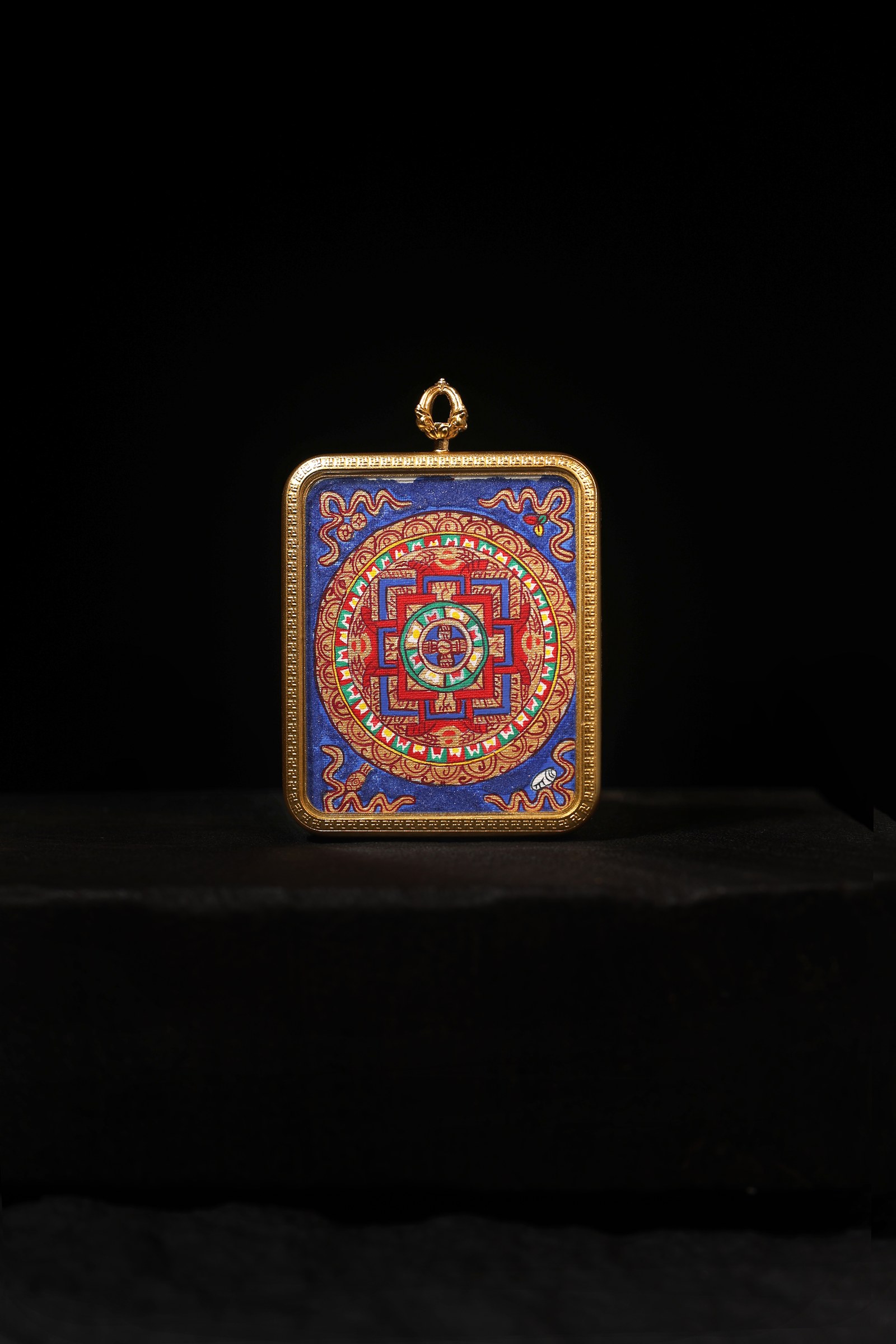
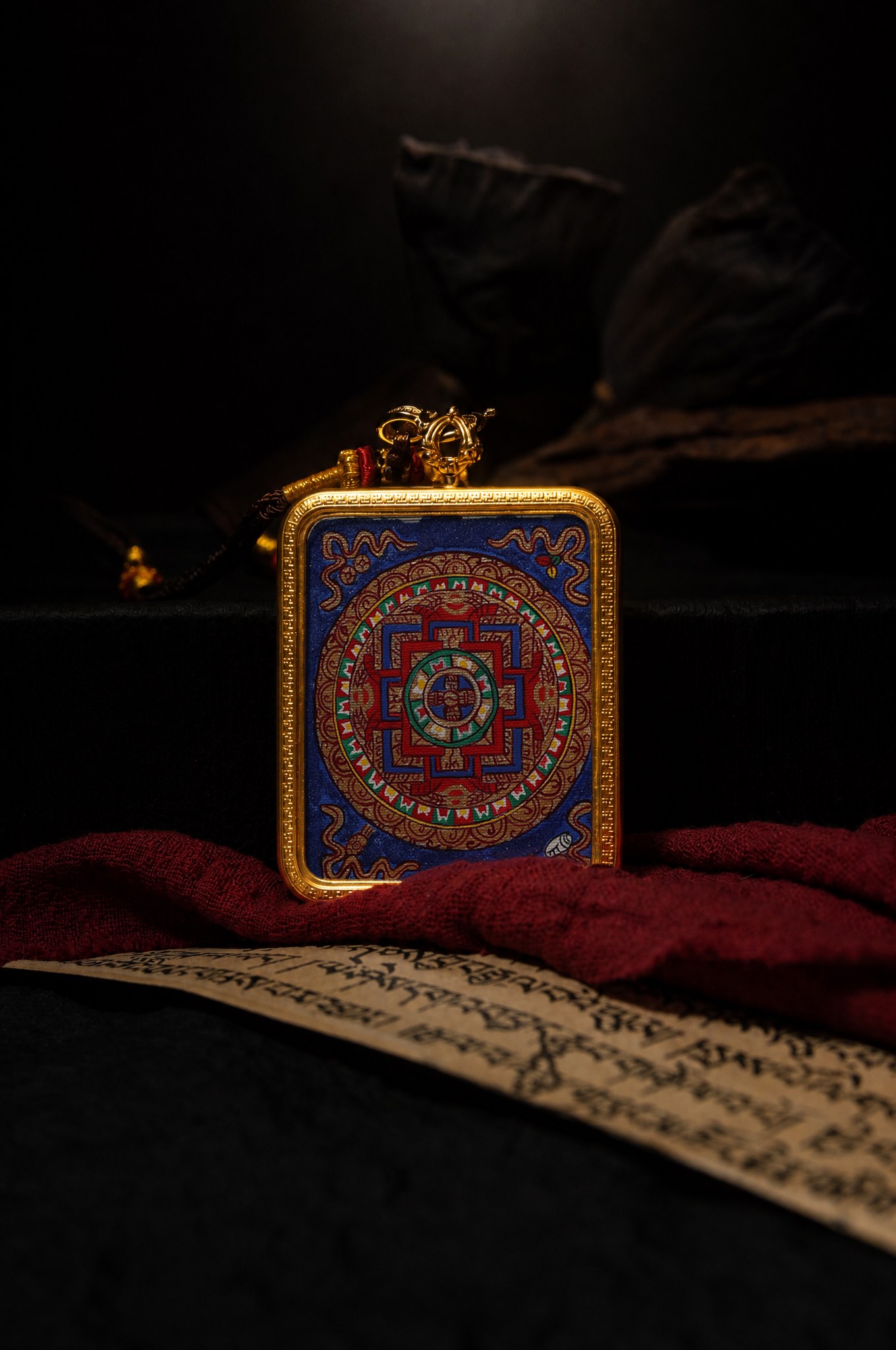
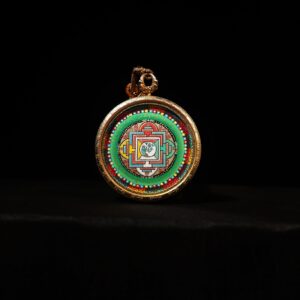
The mandala is built on a field of midnight blue so deep it seems to recede behind itself — not a flat color but a depth, like the sky in the last half hour before dawn, when the dark has almost remembered what light is. From this depth, the Wheel of Time begins to turn. At the very center, the seed syllable of Kalachakra is laid in pure hand-applied gold, the strokes placed by an artist who understood that the speed of the hand was the message. Surrounding it, the palace of the tantra unfolds in concentric rings: walls of fine linework in cinnabar and indigo, gates at the cardinal directions, deities in their precise geometric stations, and beyond all of it, the outer ring of the vajra fire that seals the mandala from disturbance. The whole composition is a visualization aid — a way of seeing, at a glance, the architecture of reality itself.
Kalachakra is one of the most complex tantric systems in Tibetan Buddhism — a complete cosmology, an integration of inner and outer, body and cosmos, time and timelessness. The mandala is its visual condensation: ten deities, four directions, three times (past, present, future), all held in a single glance. To sit with this mandala is to sit with the architecture of time itself — to feel your own small wheel turning, and to feel, beneath it, the unmoving axle on which it all rests.
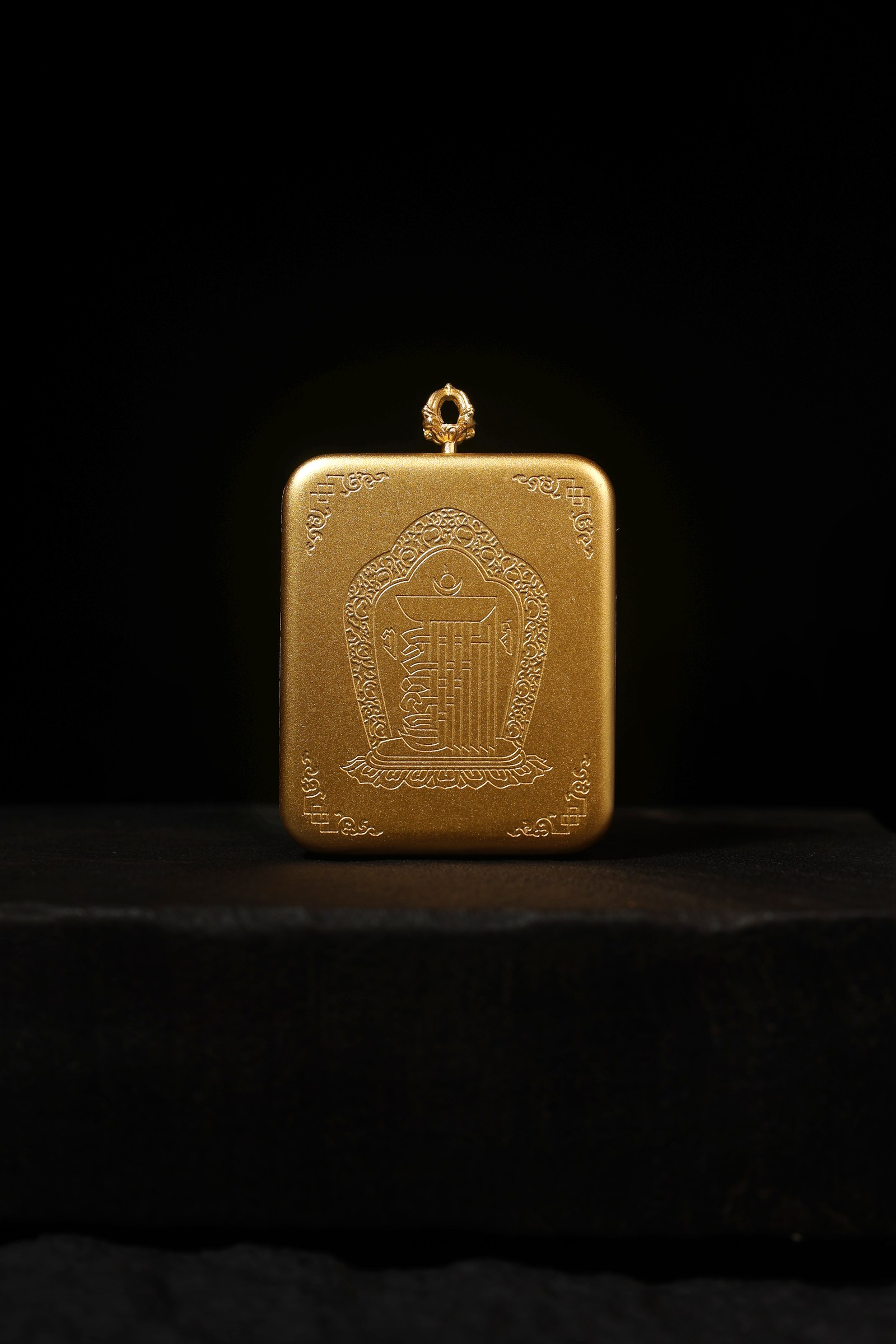
The frame is cast in gold-plated metal with a continuous swastika scrollwork — the symbol of auspicious turning, here particularly apt for a Wheel of Time. It will not tarnish or fade. A Vajra loop at the top allows hanging on wall or wear as a pendant; the included display stand lets it rest upright. Designed for dual use: place it where time feels heaviest — the office, the desk, the bedside — or carry it on a chain against your chest through the seasons that feel like they are passing too fast.
Pure hand-painted. Every line, every ring, every deity was placed by hand. The work is meticulous and unhurried. When you sit with it, the nervous system — the part of you that tracks the passing hours — begins to slow. Not because time stops. Because something in the composition speaks directly to the unmoving center. The wheel keeps turning. You, at the center, can also rest.
Usage Scenarios
Morning Calibration Before the Day Spins
Place the mandala on the desk or bedside table where the day begins. Before you check your phone, before the inbox opens, before the calendar’s first meeting — three minutes with the central syllable. The Kalachakra’s outer ring is the vajra fire: a reminder that the day has a boundary, that you are not endlessly permeable, that the wheel can turn without consuming you. The center is also here. The unmoving point. The place from which you can meet the turning without being dragged by it.
Wearable Anchor Through Fast Seasons
Thread a chain through the Vajra loop and wear the mandala against your chest through the seasons that feel like they are passing too fast — the over-scheduled year, the months that blur, the weeks where the mind cannot find a slow afternoon. Each time your fingers touch the pendant, the message is the same: time is what is happening. The still point is also what is happening. Both are here. Both are real.
Bedside Closing Ritual at the End of a Long Day
Place it on the nightstand where the day ends. The midnight-blue palette was chosen for this hour — it doesn’t fight the darkness of the room, it speaks the same language. Before sleep, rest your eyes on the central syllable. The day that just passed is one full turn of the wheel. The day that will come is another. You are not the turning. You are the still point. Sleep from there.

Reviews
There are no reviews yet.