
Hero / Introduction
Zhong Kui Talisman: Demon-Catcher’s Sword of Clearing & Calm
Some energies don’t announce themselves. They seep in — through a comment that lands wrong, a look that lingers too long, a room that feels heavier after someone leaves it. You can’t always name it. But your body knows. Shoulders tighten. Breath gets shallow. Something in the background of your day has shifted, and now everything takes twice the effort it should.
Zhong Kui has been the answer to that feeling for over a thousand years. Not a soft answer — a sharp one. A figure in crimson robes, wild beard, eyes that see through walls, gripping a sword that cuts the invisible cords other people try to tie to you. This is not the talisman you reach for when you want comfort. This is the one you reach for when you’re done carrying what was never yours.
Product Description
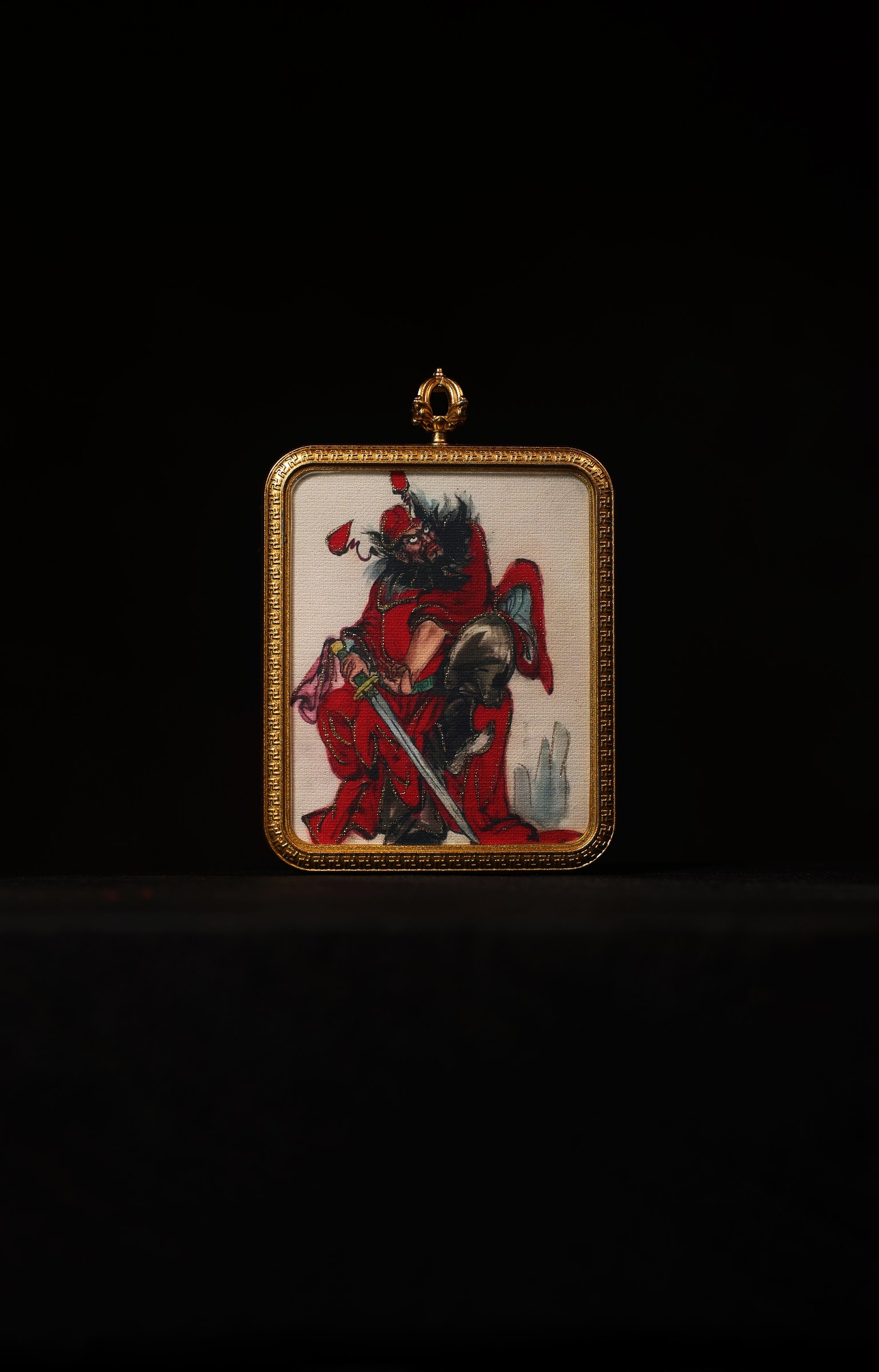
Zhong Kui — the legendary Demon Slayer of Chinese folklore — is rendered here in vivid crimson official robes and a black scholar’s cap. His eyes are uncompromising. His beard is wild. His hand grips a demon-slaying sword with golden detailing running along the blade like captured lightning. The figure is painted through a semi-hand-painted process that blends expressive ink brushwork with fine-line micro-art: bold where it needs to be bold, precise where precision matters, and alive in a way that feels less like a depiction and more like a presence. Designed for both wearing and display, it can be hung on a cord as a wearable guardian or set on its stand as a steadfast desktop sentinel.
In the Eastern folk tradition, Zhong Kui is not merely a warrior. He is the one who sees what others cannot — the low-frequency intrusions, the unspoken hostilities, the energies that drift into a space and make it unlivable — and he handles them so you don’t have to. His sword doesn’t cut flesh. It cuts cords. It severs the invisible ties that other people’s moods, expectations, and projections try to anchor in your body. The piece is designed to be placed where those cords tend to arrive: doorways, desks, the spaces where outside meets inside.
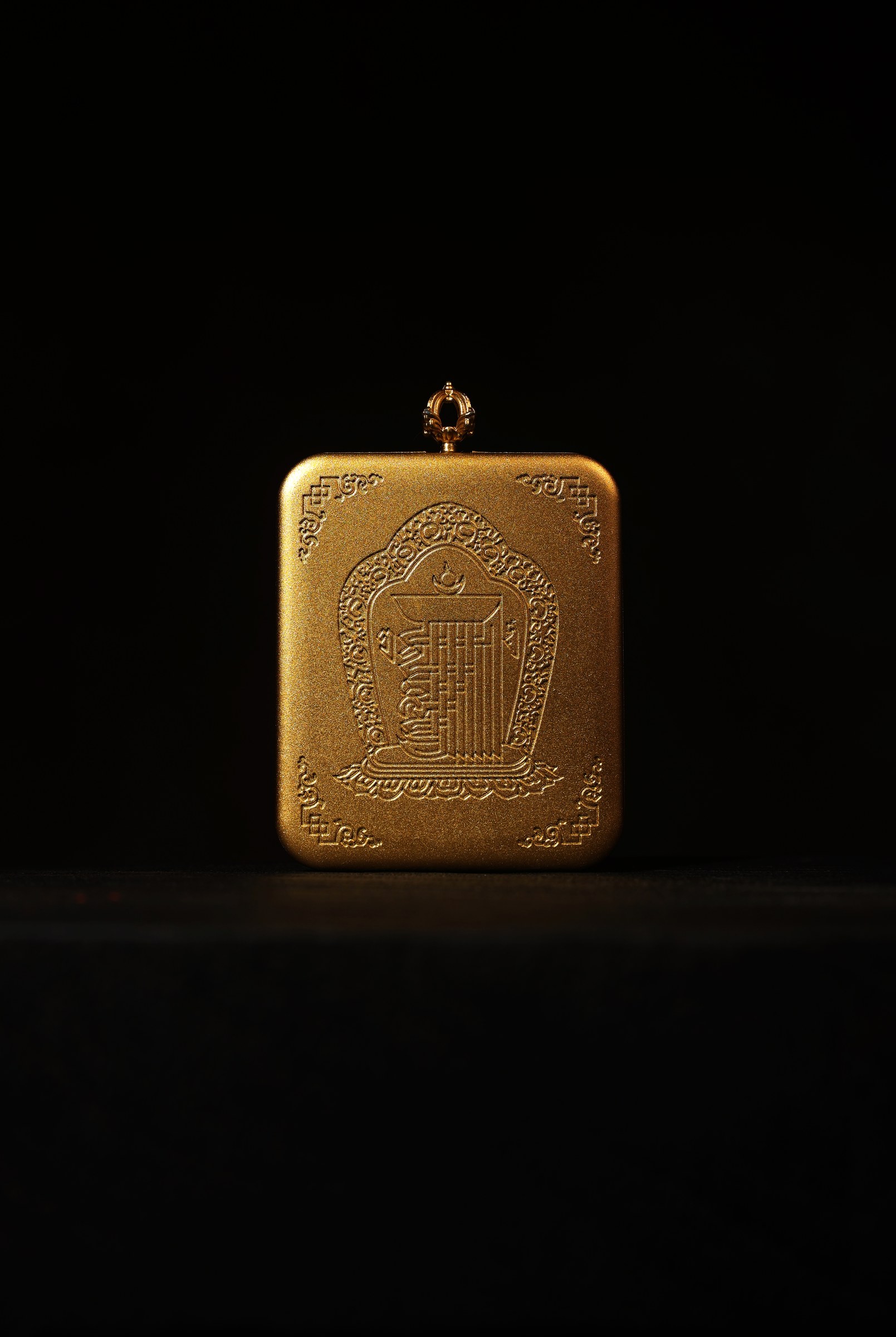
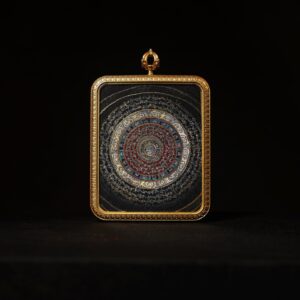
The frame is gold-plated with geometric scrollwork, a Vajra loop at the top for hanging, and a display stand for freestanding placement. Set it on an entryway console. Hang it above a doorframe. Let the space where you live feel like yours again.
Crimson robes. A black cap. A sword that has been waiting a thousand years for someone to say: enough.
Usage Scenarios
Threshold clearing
Place it on the console table or shelf nearest your front door — the physical threshold between the world’s energy and yours. Let it be the first thing the day meets when it walks in, and the last thing it sees when it leaves. If you’ve been carrying home a weight that isn’t yours, let the sword handle it here.
Desk-side boundary
Position it beside your screen in the space where you work. When someone’s energy has filled the room — a tense email, a draining call, the residue of a conversation you didn’t consent to — let your eyes land on the crimson robes and the steady gaze. Zhong Kui doesn’t negotiate with what doesn’t belong to you.
Evening release ritual
At the end of the workday, stand in front of the piece for three breaths. On each exhale, name silently one thing you carried today that wasn’t yours — someone’s mood, someone’s urgency, someone’s expectation. Visualize the sword cutting each cord. Walk away lighter.
Wearable warding
Thread a cord through the Vajra loop and wear Zhong Kui against your chest when you enter spaces dense with other people’s projections — crowded places, family functions, rooms where you historically absorb what isn’t yours. Let the Demon Slayer walk ahead of you.
Reviews
There are no reviews yet.