Hero / Introduction
The Compassionate Eyes: Green Tara’s Gaze & Inner Stillness Talisman
There’s a particular kind of tired that sleep doesn’t fix. The kind that lives behind the eyes — the tiredness of being looked at, of performing, of holding a version of yourself together for other people’s comfort. It accumulates quietly, a residue you don’t notice until you catch your own reflection and realize you’ve been squinting for hours.
What would it feel like to be seen without being evaluated? Not with scrutiny, not with expectation — just witnessed. The way water receives whatever falls into it, without comment.
The Eyes of Green Tara have been holding that space for centuries. In Tibetan tradition, Green Tara is the one who sees suffering and responds immediately — no delay, no conditions, no questions about whether you deserve it. This piece captures her gaze: eyes half-closed, looking down, not in withdrawal but in deep, unhurried attention. Set it where you can find it when the performance gets heavy.
Product Description
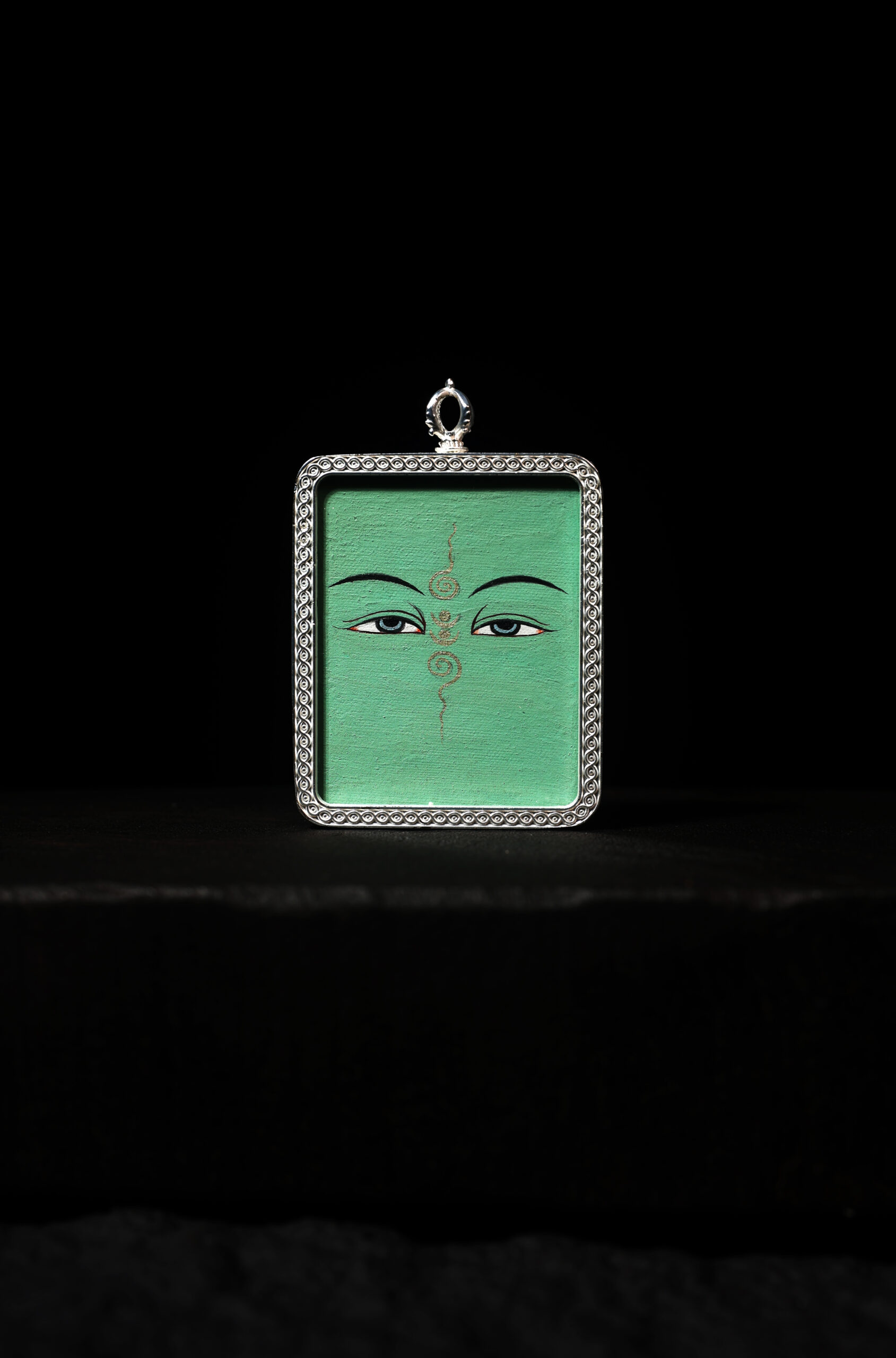
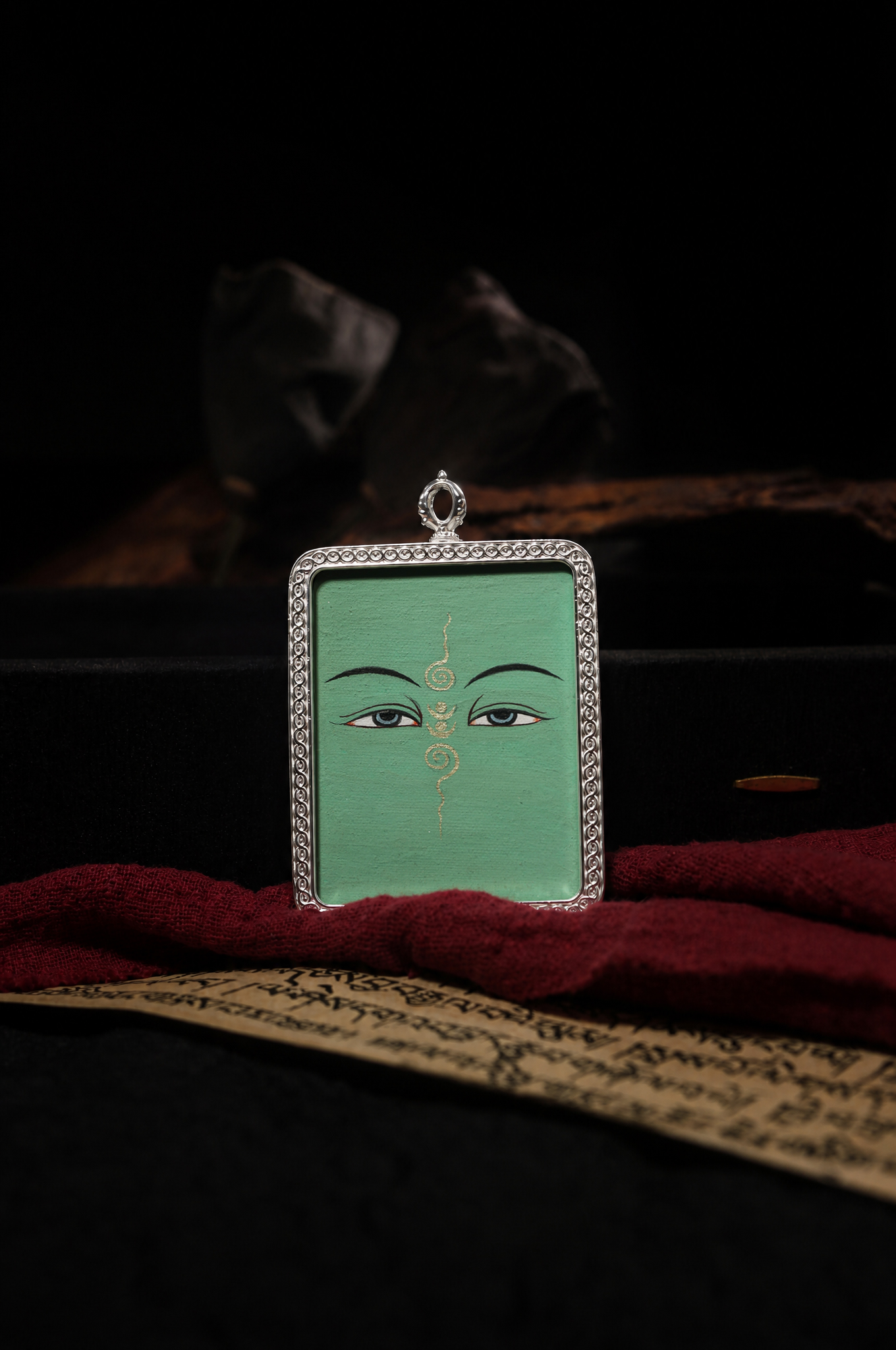
The background is the first thing — a matte turquoise green that doesn’t reflect light so much as absorb it, pulling your eye inward like a deep, still pool. Against this field, two Buddha eyes gaze downward, rendered in fine gold line work so delicate it seems to float rather than sit on the surface. Every stroke is pure hand-painted — the gold lines laid with a brush fine enough to hold a single breath, the turquoise ground mixed and layered by hand until it held exactly the depth the artist felt.
The eyes are half-lidded. Not closed, not open. That liminal state — the threshold between seeing inward and seeing out — is where compassion lives. Between the brows, a golden spiral Unalome traces the soul’s path: the tangled beginning, the gradual unwinding, the opening into something luminous. It’s a map, really. A reminder that the mess isn’t a detour. It’s the path.
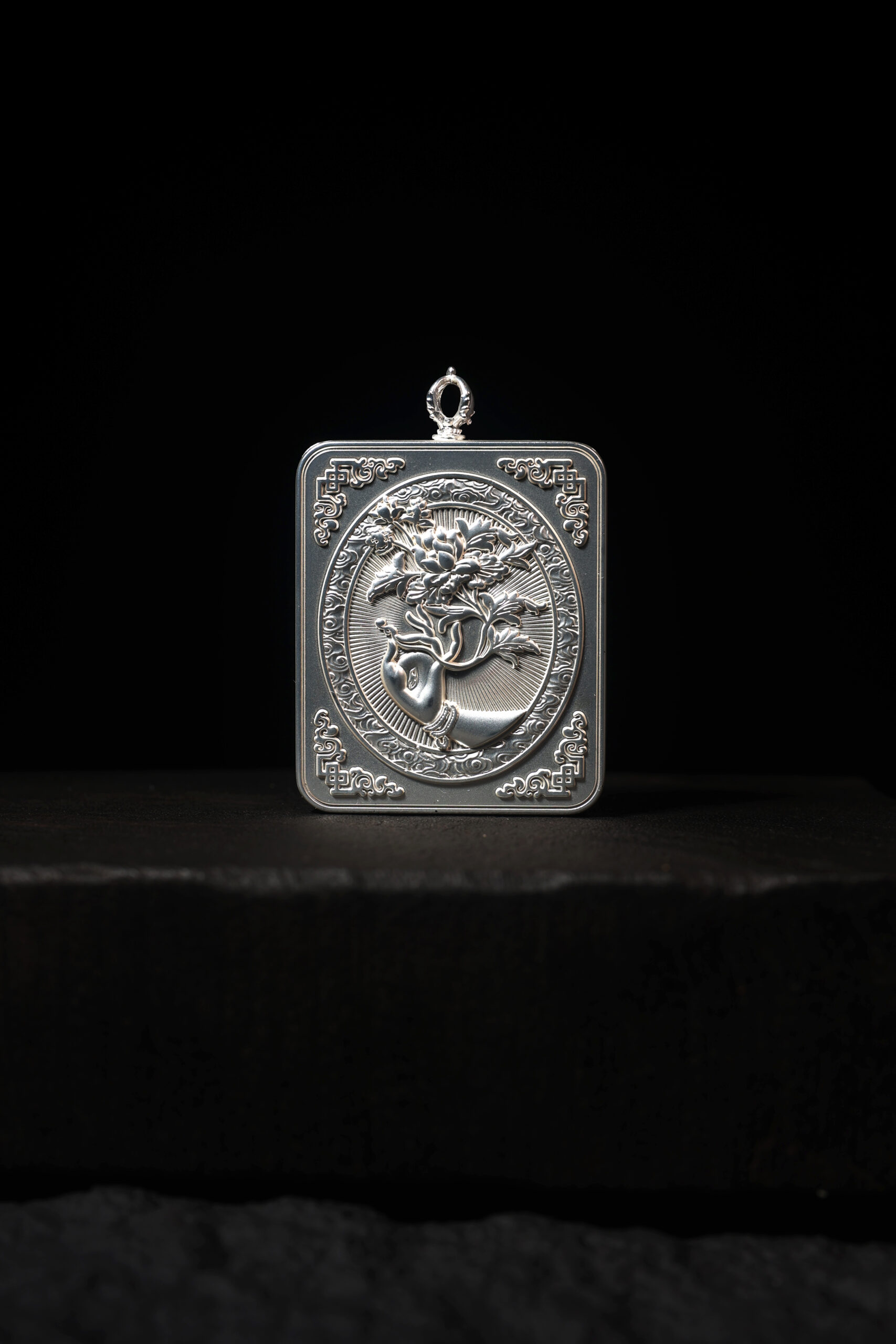
The silver-toned frame carries a swastika-patterned geometric design — an ancient solar symbol representing cyclical renewal, the turning of what feels stuck. The casing is solid, heirloom-grade, built to hold its quiet presence for decades. It comes with a display stand for a desk or shelf, and a sacred loop at the top if you choose to hang it — above a bed, near a window, wherever the gaze can find you. Wear it on a chain and those half-lidded eyes travel against your heart; set it on the stand beside your screen and it becomes a still pool your gaze can rest in between tasks.
In Tibetan practice, Green Tara’s eyes represent non-judgmental awareness — the kind of seeing that doesn’t flinch, doesn’t assess, doesn’t need you to be anything other than exactly what you are in this moment. The turquoise and gold palette is deliberately soothing: a color combination that the nervous system reads as safe. This is the piece you reach for when the inner critic gets too loud and you need something older, quieter, and more patient to look at instead.
Usage Scenarios
Bedside Companion & Sleep Transition
Place it on your nightstand, facing the pillow. The downward gaze and soft turquoise field are the last things your eyes find before they close. Let the Unalome remind you: the day’s tangles are part of a longer unwinding. The eyes have already seen what you’re carrying. You don’t have to explain it.
Wearable Stillness & Workspace Reset
Wear it on a chain against your chest when the performance-tightness follows you out the door — on commutes, in meetings, in waiting rooms where the air holds expectation. When the screen has been your only view for too long, turn your gaze to the Eyes on the desk stand. They look back without demand — no expectation, no assessment, just witness. Three breaths with that downward, compassionate gaze can dissolve the tightness in your jaw and shoulders faster than any reminder app.
Meditation & Gentle Return
Set it in your practice space as your drishti — your soft focal point. When the mind wanders, when the inner critic rises, when you catch yourself grading your own meditation — look at the eyes. They are not grading you. Return to the breath. Return to the turquoise field. Begin again, as many times as you need.
Reviews
There are no reviews yet.